
On this page
Painting guides / Commercial Painting & Flooring
Published: 8 January 2026 · Updated: 4 October 2026
By Noble Painting Editorial Team · 2-minute read
A commercial paint system is a planned combination of preparation, primer and finish for a specific surface. Its purpose is to meet the building’s actual use, rather than apply the most heavy-duty product everywhere. Start by identifying the performance required in each area.
Write a performance brief
For reception walls, appearance and cleaning may be priorities. Corridors may need attention to repeated contact. Exposed metal needs corrosion assessment. Floors may need a specialised system for traffic, cleaning or other exposure.
Ask the owner or facility manager which requirements are mandatory. Do not assume every commercial wall needs fire-rated, antimicrobial or industrial coatings.
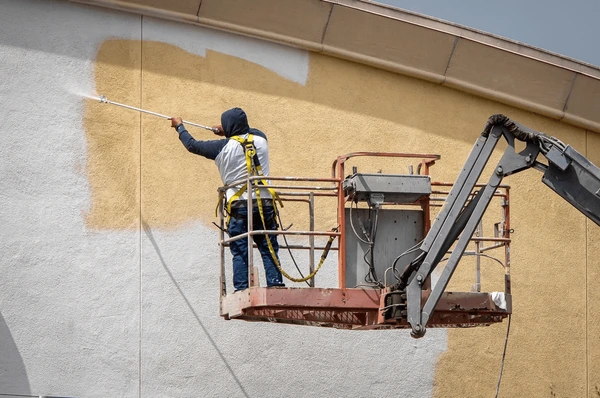
Describe the substrate and existing condition
- Identify plasterboard, masonry, timber, metal or concrete.
- Record the existing coating where known.
- Photograph moisture, peeling, contamination or rust.
- Define the preparation and any repair limits.
- Confirm compatibility between primers and topcoats.
A product’s performance claim is meaningful only when the specified preparation and application are followed. Weak underlying paint, active moisture and incompatible layers can undermine a premium finish.
Request supporting product information
Ask for technical and safety data for the proposed products. Confirm approved uses, coverage, coat count, application conditions and relevant test or certification information for any requirement you have specified.
For floors, system-specific preparation and moisture requirements matter. Dulux’s Luxafloor WB data sheet is an example of detailed guidance for one flooring product, not a specification for every commercial surface.
Connect the coating to the work programme
Discuss ventilation, exclusion areas, application sequence and return to service. Drying, recoating and full service readiness may be different stages. The programme must allow for the specified product and actual conditions.
Agree how substitutions will be approved. An alternative needs to meet the original surface and performance requirements; a similar colour or brand category is not enough.
Keep the handover information
- Surface-by-surface product and colour schedule.
- Preparation and repair records where required.
- Maintenance and cleaning instructions.
- Warranty terms and exclusions.
- Details of any outstanding items or use restrictions.
This record helps later repairs and prevents incompatible touch-ups. Contact Noble Painting’s commercial painting team with the building use and requirements. Specialist design or compliance requirements should be confirmed by the relevant project professional.
Frequently asked questions
Does commercial-grade paint mean the same thing across brands?
No. Specify actual product performance and approved uses. The phrase alone is not a complete coating specification.
Can a product substitution be accepted because it is the same colour?
Colour is only one requirement. Check substrate compatibility, performance, preparation and application instructions before approval.
Related guides
- Commercial vs Residential Painting: Planning the Right Scope
- Commercial Painting Cost in Brisbane: How to Build a Useful Budget
- Brisbane Office Painting: A Plan to Reduce Downtime
- Epoxy Flooring Cost in Brisbane: What Your Quote Should Include
Explore all Commercial Painting & Flooring guides or return to the painting guide library.




2 Responses