Table of Contents
Choosing the right paint for your home doesn’t seem complicated—until you walk into the paint aisle and find yourself staring at dozens of options. One of the most important decisions you’ll make is choosing between Water-Based and Oil-Based Paints. This choice affects everything from the look of your walls and trims to how long the finish lasts and how easy the paint is to maintain.
At Noble Painting, we help homeowners make informed decisions every day. This guide breaks down the real differences between Water-Based and Oil-Based Paints, explains the Water-based paint advantages and Oil-based paint benefits, and helps you understand which paint is best for each surface in your home.
If you’re planning a repaint or renovation project, this breakdown will help you feel confident about your selection—and if you’d like professional guidance, you can always reach out via our Contact Us page.
What Makes Water-Based and Oil-Based Paints Different?
Before diving into performance and application, it’s helpful to understand the basic science behind Water-Based and Oil-Based Paints.
Water-Based Paints
Water-based paints use water as the main solvent. As the water evaporates, the paint dries quickly and forms a smooth finish. Because they rely on water rather than harsh chemicals, they are easier to work with and far more environmentally friendly.
Oil-Based Paints
Oil-based paints use mineral spirits or turpentine as the main solvent. They dry more slowly but create a thick, durable layer ideal for surfaces that take more wear and tear.
This fundamental difference affects everything—from drying times and application to maintenance and longevity.
Water-Based and Oil-Based Paints: Pros and Cons
Understanding the strengths and weaknesses of each type is key to choosing the right option for your home.
Benefits of Water-Based Paints
Water-based paints offer several strong advantages:
Fast drying time
Low odour compared to oil-based alternatives
Easy cleanup with just water and mild soap
Low VOCs, making them safer for indoor use
Superior colour retention over time
More flexible and less prone to cracking
These are some of the biggest Water-based paint advantages, especially for interior walls and ceilings where quick-dry and low odour are major perks.
Benefits of Oil-Based Paints
Oil-based paints also have unique benefits that make them ideal for specific surfaces. The main Oil-based paint benefits include:
Extremely durable finish
High resistance to wear and tear
Smooth, glass-like finish, especially on trims and doors
Better adhesion on previously painted oil-based surfaces
Longer open time, meaning fewer visible brush marks
These qualities make oil-based paints especially popular for high-traffic or high-impact areas.

How the Difference Impacts Your Project
When comparing Water-Based and Oil-Based Paints, it helps to look at how they perform in everyday home-painting scenarios.
Drying Time
Water-Based Paints: Typically touch-dry in 30–60 minutes.
Oil-Based Paints: Can take 6–8 hours (or longer) to dry between coats.
If you’re planning a quick refresh, water-based options give you faster turnaround.
Application Experience
Because water-based paints dry quickly, they’re great for large surfaces but less forgiving when it comes to blending edges. Oil-based paints allow for longer working time, making them better for achieving perfectly smooth finishes on doors and trims.
Durability & Longevity
This is a major factor when considering Paint durability comparison:
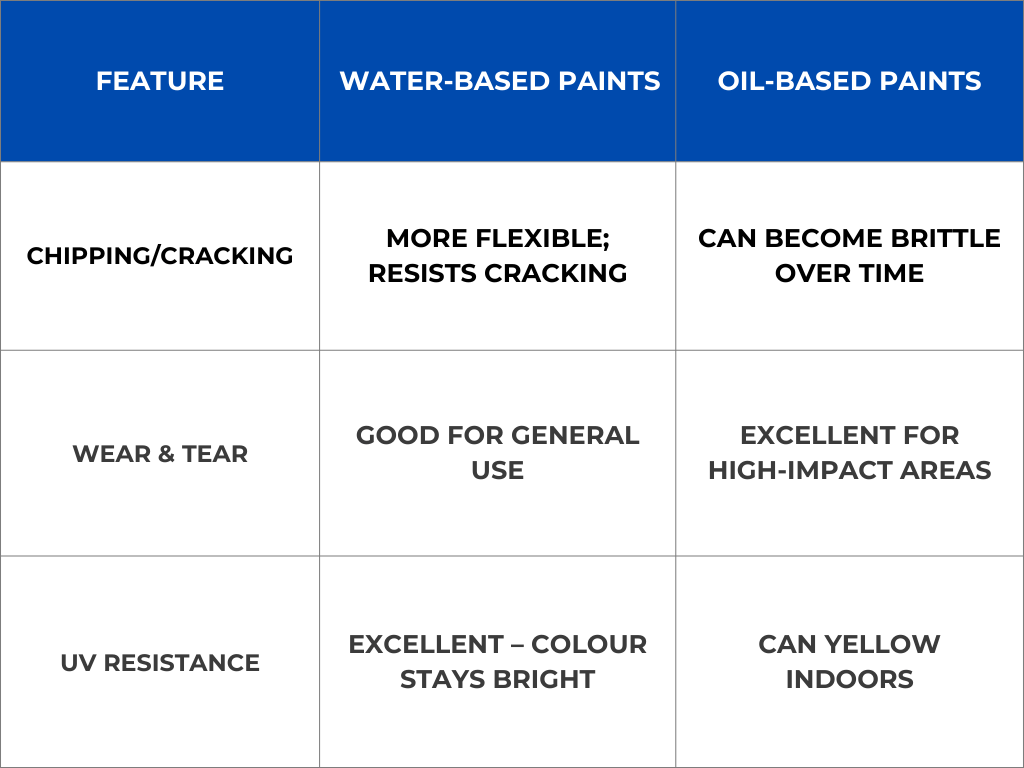
Overall, oil-based options win in durability on trims and woodwork, while water-based paints win for colour longevity and flexibility on walls.
Types of House Paint and Where Each One Works Best
To make better choices, it helps to understand the Types of house paint available and how Water-Based and Oil-Based Paints fit into the bigger picture.
Most Common Paint Types:
Interior wall paint (water-based)
Exterior wall paint (water-based or hybrid)
Trim paint (oil-based or water-based enamel)
Ceiling paint (water-based)
Metal paint (oil-based or specialised water-based)
Professional painters carefully match the paint formula to the surface, environment, and usage pattern to ensure long-term results.
Interior and Exterior Paint Options: Which Type to Use?
When choosing between interior and exterior paint options, it’s important to know that both Water-Based and Oil-Based Paints are used strategically.
Interior Use
Water-based paints remain the most popular choice for interiors because:
They are odour-friendly
They dry quickly
They’re easier to clean and maintain
They offer excellent colour retention
In bedrooms, living rooms, and hallways, water-based options simply make more sense. The Water-based paint advantages are well suited for indoor conditions.
Exterior Use
Exterior environments face sun, rain, wind, and temperature changes. Modern water-based exterior paints are incredibly durable and resistant to fading, making them the preferred choice for most Australian homes.
Oil-based paints still play a role outdoors—mainly for metal surfaces, timber trims, and areas needing extra toughness.
When to Choose Water-Based Paints
Water-based paints are best for situations where ease of use, fast drying, and low odour matter most. They shine on:
Ideal Surfaces for Water-Based Paints
Interior walls
Ceilings
Gyprock surfaces
Masonry
Brick
Render
Weatherboards
Most exterior walls
They also provide the flexibility needed for homes in climates with fluctuating temperatures.
If you’re starting a whole-home repaint, water-based options will likely dominate most rooms because of their strong performance and minimal disruption to daily living.
When to Choose Oil-Based Paints
Oil-based paints still hold an important place. Their durability and finish quality make them ideal for:
Ideal Surfaces for Oil-Based Paints
Skirting boards
Doors
Window frames
Architraves
Furniture
High-impact surfaces
Metal surfaces
These areas demand a tougher coating that stands up to repeated handling, friction, and cleaning.
Oil-based paints create the kind of classic, glossy finish homeowners often love—especially in heritage-style interiors.
Water-Based and Oil-Based Paints: A Detailed Paint Durability Comparison
Here’s how the two options stack up in terms of long-term performance.
1. Resistance to Moisture
Water-Based Paints: Very resistant once cured; excellent for kitchens and bathrooms.
Oil-Based Paints: Also strong, but more prone to mildew unless paired with the right primer.
2. Resistance to UV Light
Water-Based: Superior UV resistance; won’t yellow.
Oil-Based: May yellow in low-light indoor spaces.
3. Resistance to Scratching
Water-Based: Good, but can chip if the surface wasn’t prepared properly.
Oil-Based: Excellent; ideal for trims.
4. Flexibility
Water-Based: Expands and contracts with temperature; prevents cracks.
Oil-Based: More rigid and can crack with age.
Environmental and Health Considerations
As more homeowners look for sustainable options, water-based paints continue to grow in popularity.
Low VOC
Safer for children and pets
Less environmental pollution
Faster project turnaround
Oil-based paints, while durable, have higher VOC levels and a stronger smell, requiring proper ventilation during use.
How to Know Which Paint is Right for You
Choosing between Water-Based and Oil-Based Paints comes down to:
The surface you’re painting
The finish you want
The durability required
The environmental conditions
Your timeline
Here’s a quick breakdown:
Choose Water-Based If You Want:
Quick drying
Low odour
Easy maintenance
No yellowing
A modern, matte or low-sheen finish
Choose Oil-Based If You Want:
A high-gloss, traditional finish
Maximum durability
Long-lasting trim protection
A smooth, glass-like final result
Professional Tip: You Can Mix Systems—With the Right Primer
Many homeowners wonder if they can apply water-based paint over an old oil-based surface. The answer is yes—with proper preparation and primer.
Professionals often combine both systems:
Water-based on walls
Oil-based on trims
This creates a durable yet modern surface group throughout the home.
If you’re unsure what you currently have on your walls or trims, a professional can help you test the existing surface.
Why Choose Noble Painting for Your Project?
Your choice between Water-Based and Oil-Based Paints will shape how your home looks and ages over time. At Noble Painting, we help you choose the right system and finish for each room and surface. Our team uses top-quality materials and techniques to deliver flawless, long-lasting results.
Whether you’re painting a new home, renovating, or refreshing a single room, we’re here to help. You can start by visiting our homepage or reaching out directly via the Contact Us page.
We’ll guide you through your interior and exterior paint options, explain the Types of house paint, and help you choose the best combination of Water-Based and Oil-Based Paints for your specific needs.
Conclusion
Understanding the differences between Water-Based and Oil-Based Paints empowers you to make the right choice for your home. Water-based options offer convenience, environmental benefits, and excellent flexibility, while oil-based options deliver unmatched durability for high-impact surfaces.
Both systems have their place—and with the right combination, you can achieve a beautiful, long-lasting finish throughout your home.
When you’re ready to begin your project, the team at Noble Painting is here to help you every step of the way.